Outsourced Accounting and Bookkeeping Services: What to Look for in 2026
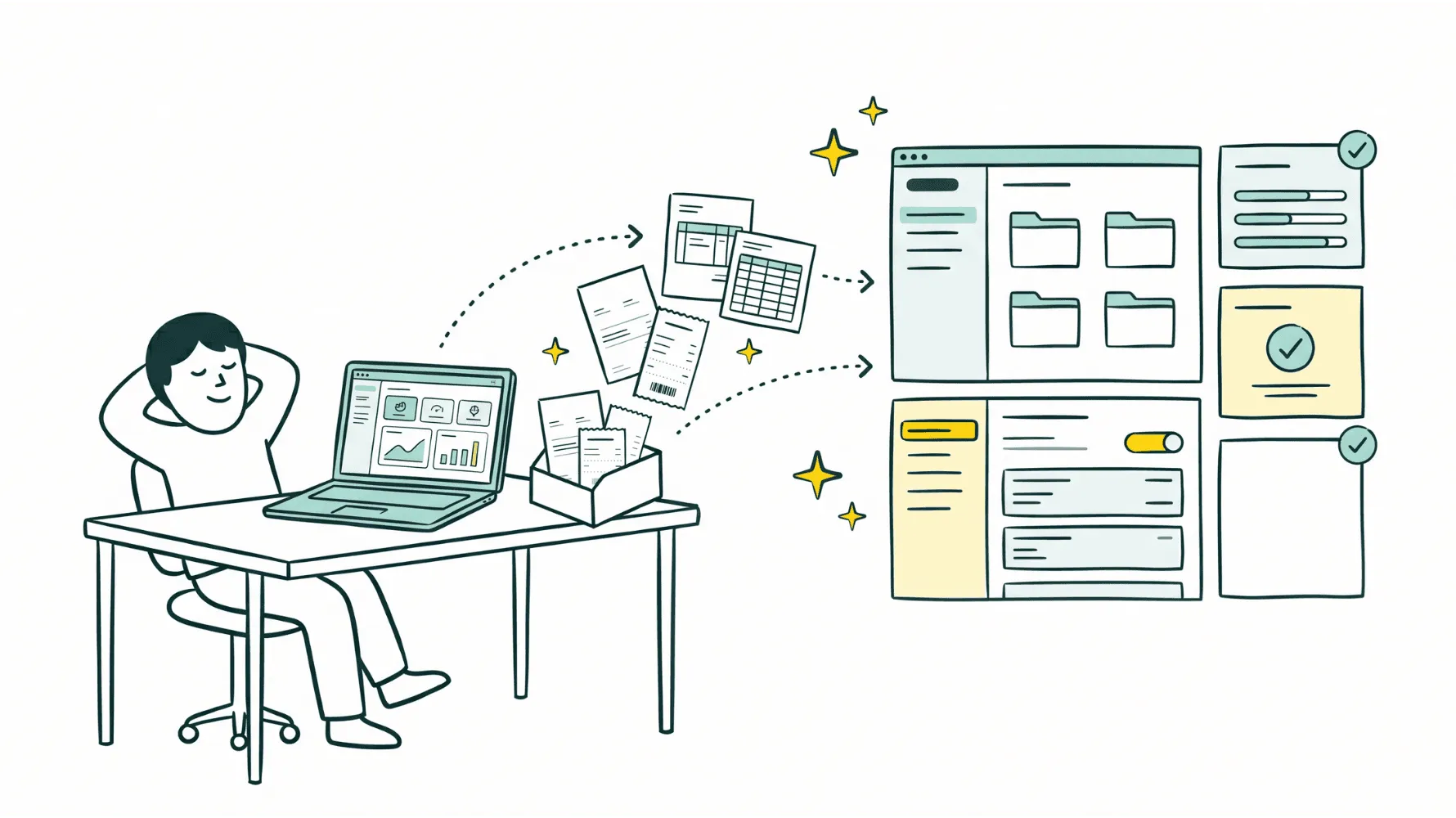
A few months ago I got on a call with a founder who had been using the same outsourced bookkeeper for three years. She was paying $1,200 a month and still doing half the work herself - downloading supplier invoices from portals, chasing late-paying clients over email, and manually reconciling her bank account every Friday afternoon.
She wasn't getting bad bookkeeping. She was getting incomplete bookkeeping. And she didn't know there was a difference.
I'm Amalia Bercot, co-founder of Sanso. We built an AI-powered finance operations service that handles invoicing, accounts receivable, accounts payable, and bank reconciliation for small and mid-sized businesses. Before Sanso, I spent years at Brevo working with SMBs on operations and client success. The same frustration kept coming up: business owners who outsourced their accounting still felt chained to their financial admin.
The problem isn't outsourcing itself. It's that most businesses pick a provider based on price and proximity without thinking about what actually matters. This guide breaks down what outsourced accounting and bookkeeping services should look like in 2026, what's changed, and what to demand from any provider you're evaluating.
Still Spending Hours on Finance Admin Every Week?
Sanso handles your invoicing, AP, AR, and reconciliation so you can focus on running your business.
Book a CallWhat Outsourced Accounting and Bookkeeping Services Actually Include
Outsourced accounting and bookkeeping services cover the day-to-day financial work that keeps your business running - recording transactions, categorizing expenses, reconciling bank accounts, managing AP and AR, and producing financial statements. An external provider does this instead of you or an in-house hire.
The scope varies wildly depending on who you work with, though. Here's how it breaks down:
Basic bookkeeping covers transaction entry, bank reconciliation, and monthly reports. This is what most freelancers and budget firms offer.
Full-service outsourced accounting adds accounts payable management - processing supplier bills, validating invoices, scheduling payments - plus accounts receivable (creating invoices, tracking who owes you, following up on late payments) and financial reporting.
Finance operations outsourcing goes further. Providers like Sanso actually execute the work, not just record it. That means collecting supplier invoices automatically from email and supplier portals, validating every bill before payment, creating and sending your customer invoices, collecting overdue payments with real follow-up (not just automated email reminders), and reconciling complex payouts from marketplaces or payment processors.
That distinction matters more than it sounds. A bookkeeper records. A finance operations service does the work so you don't have to.
Why More Businesses Are Outsourcing in 2026
The accounting outsourcing market has been growing steadily for years, and that growth isn't slowing down. There are a few reasons why.
The Talent Shortage Is Real
The US accounting workforce has been shrinking steadily. Fewer people are entering the profession, and experienced bookkeepers are retiring faster than they can be replaced. If you're a 10-person company, you're not going to win a hiring battle against a mid-market firm with a finance team and a recruiter. Outsourcing sidesteps the problem entirely.
The Cost Math Has Shifted
A full-time in-house bookkeeper in the US costs $45,000 to $65,000 in salary alone. Add payroll taxes, benefits, software licenses, workspace, and management overhead, and the real cost lands between $65,000 and $100,000 per year.
Outsourced accounting and bookkeeping services run $300 to $2,500 per month. That's a fraction of the cost, and you skip the HR headaches entirely - no sick days, no turnover risk, no two-week notice surprises.
AI Changed What's Possible
This is the big one. AI is automating a growing share of routine accounting tasks every year. That doesn't mean robots replacing accountants - it means outsourced providers who use AI can do way more for you at the same or lower price.
At Sanso, for example, our AI reads every email that hits your inbox, figures out which attachments are actual invoices (not quotes, not greeting cards, not contracts), and routes them straight to your accounting platform. A computer-use agent logs into your supplier portals, downloads invoices, and files them. The reconciliation engine matches marketplace payouts against hundreds of individual orders - 99% of them automatically.
None of this was possible three years ago. If you're still evaluating outsourced accounting and bookkeeping services based on what was available in 2023, you're looking at the wrong options.
Seven Things to Look for in an Outsourced Accounting Provider
Not all providers are equal. Here's what I'd look for - and what I've seen trip up a lot of businesses who picked the wrong one.
1. They Work Inside Your Existing Tools
A good outsourced provider plugs into your current stack - QuickBooks, Xero, Pennylane, your bank accounts, your email - and works in the background. You shouldn't need to learn a new platform or check a separate dashboard just to see what's going on with your money.
That's how we built Sanso. We work inside your existing accounting software. Every invoice, every payment, every reconciliation entry shows up in the tools you already use. Nothing gets hidden behind a proprietary login.
2. They Handle Execution, Not Just Recording
Traditional bookkeepers record what happened after the fact. In 2026, that's table stakes. You want a provider that actually does the financial operations - collecting invoices, validating bills, sending your invoices to customers, chasing payments, reconciling accounts.
Ask this question during evaluation: "If a supplier sends me an invoice to the wrong email address, who tracks it down?" If the answer is "you," keep looking.
3. They Use AI With Human Oversight
Pure automation breaks on edge cases. Pure human service doesn't scale. What you actually want is AI doing the repetitive stuff and humans stepping in for exceptions and judgment calls.
When you're evaluating a provider, ask about their error rate. Ask how they handle discrepancies. If they're using AI, they should be able to tell you their automation rates and what happens when something doesn't match.
4. They Price on Outcomes, Not Hours
Hourly billing creates a bad incentive: the longer it takes, the more you pay. Find providers who price based on what they deliver - invoices processed, payments collected, transactions reconciled - not how many hours they log.
At Sanso, our pricing is tied to what actually gets done - monthly plans range from $300 to $2,000 depending on volume, not on how fast or slow someone works.
Want a Provider That Checks All Seven Boxes?
Sanso integrates with your existing tools, handles AP and AR end-to-end, and prices on outcomes - not hours.
Book a Call5. They Can Handle Accounts Receivable, Not Just Payable
Most outsourced bookkeeping services focus on the payable side - processing bills, categorizing expenses. But getting paid matters just as much, and far fewer providers do it well.
You want AR that goes beyond automated payment reminders. When a customer disputes an invoice or says they need it reissued to a different entity, someone has to handle that back-and-forth. Automated dunning emails won't cut it. At Sanso, our team handles the full cycle: void the incorrect invoice, fix the amount or recipient, reissue, and follow up until payment actually arrives.
6. They Protect You From Costly Mistakes
Supplier invoice fraud and duplicate payments happen more often than most business owners think. Your provider should be checking every invoice before it gets approved - looking for duplicates, confirming amounts match purchase orders, flagging VAT discrepancies.
If your current provider just processes whatever lands in the inbox without verification, that's a real risk sitting in your accounts payable right now.
7. They Communicate Proactively
If your provider only shows up when the monthly report is due, they're not really managing your finances. You want someone who flags unusual transactions, alerts you to cash flow issues, and keeps you in the loop without making you chase them for updates.
The bar should be simple: you hear from them when something needs your attention. Otherwise, you don't think about it.
Red Flags When Evaluating Providers
Watch for these during the evaluation process:
- They can't explain their tech stack. If a provider in 2026 is still doing everything by hand, their costs will catch up to them eventually - or their quality will.
- They want you on their proprietary platform. That's vendor lock-in. Your financial data should live in standard accounting tools that you control.
- Pricing is vague or "custom quote only." Any real provider can give you a pricing range before a sales call. If they can't, you'll probably overpay.
- No mention of validation or controls. If they process bills without checking for duplicates or accuracy, they're adding risk, not removing it.
- They only handle one side of the ledger. A provider that manages your AP but ignores your AR is solving half the problem.
How to Make the Switch Without Disrupting Your Business
Switching providers doesn't have to be painful. Here's how I'd approach it:
Start With One Workflow
Don't move everything at once. Pick the area causing you the most headaches - usually accounts payable or late payment collection - and let the new provider prove themselves there first. Expand later once you trust the work.
Keep Your Existing Accounting Software
Any provider worth working with should integrate with what you already use. If they're asking you to migrate to a new platform before they'll start, that's a red flag. At Sanso, clients connect their existing tools in a one-time setup and never have to change software.
Set Clear Success Metrics
Before you start, decide what "working" actually looks like. Some examples: percentage of invoices captured automatically, reduction in days sales outstanding, hours per week you personally spend on finance admin (that number should get close to zero).
Give It 60 Days
A good provider needs at least two monthly cycles to learn your vendor patterns, customer payment habits, and the weird edge cases every business has. Judge results after the second month, not the first week.
The Real Cost of Getting This Wrong
The costs of choosing the wrong provider - or not outsourcing at all - add up faster than most people expect.
Unbilled clients mean revenue you earned but never collected. Duplicate supplier payments drain cash quietly. Missing invoices create compliance headaches at tax time. And every hour you spend on finance admin is an hour you're not spending on the actual business.
A significant share of small businesses now outsource at least some of their accounting. The rest are either handling it themselves (probably burning 10 to 15 hours a week on it) or stuck with a provider that isn't pulling its weight.
The whole point of outsourced accounting and bookkeeping services is to build a system where your financial operations run correctly, completely, and without you being involved. That's what good looks like in 2026.
Ready to See What AI-Powered Finance Ops Looks Like?
Connect your tools once and let Sanso run your invoicing, collections, and reconciliation in the background.
Book a CallFrequently Asked Questions
What are outsourced accounting and bookkeeping services? It means an external provider handles your financial operations instead of an in-house employee. That includes transaction recording, bank reconciliation, accounts payable and receivable, invoicing, and financial reporting. In 2026, the better providers use AI to automate routine tasks and have humans step in for exceptions.
How much do outsourced bookkeeping services cost for small businesses? Most small businesses pay between $500 and $2,500 per month, depending on transaction volume and what's included. Basic transaction recording starts around $300 per month. Full-service finance operations - AP, AR, and reconciliation - typically runs $1,000 to $2,000 per month.
What's the difference between outsourced bookkeeping and outsourced accounting? Bookkeeping is the day-to-day stuff: recording transactions, categorizing expenses, reconciling accounts. Accounting sits a level above - financial analysis, tax planning, strategic advisory. A lot of providers now bundle both together under "outsourced accounting and bookkeeping services," so make sure you ask exactly what's included before you sign anything.
When should a small business outsource its bookkeeping? The clearest signs: the founder is spending more than five hours a week on finance admin, invoices are going out late, supplier bills are piling up unprocessed, or the business is growing faster than one person can keep up with. For most companies, that tipping point hits somewhere around 5 to 10 employees.
Is it safe to outsource my company's financial data? Yes, as long as you pick a reputable provider with real security practices. Look for data encryption, secure integrations with your accounting platform, and clear data handling policies. If the provider works inside your existing tools - the way Sanso does with QuickBooks or Xero - your data stays in systems you already trust and control.
What should I look for in an outsourced accounting provider? Integration with your existing tools is a must. Beyond that, look for providers that handle both accounts payable and receivable, use AI with human oversight, price based on outcomes instead of hours, and actually communicate with you before things go wrong. Avoid anyone who requires a proprietary platform or gets cagey about pricing.
How is AI changing outsourced accounting services? AI automates invoice capture from emails and supplier portals, classifies documents (telling invoices apart from quotes or contracts), checks bills for duplicates and errors, and reconciles complex payouts against individual transactions. The result is faster processing, fewer mistakes, and lower costs. A provider using AI can now handle work that used to require multiple full-time employees.
Can I outsource just part of my accounting? Yes. Plenty of businesses start with just accounts payable or bookkeeping and expand from there. A good provider will let you begin with one workflow and add services over time. Start with whatever's causing you the most pain - that's the fastest way to see whether it's working.
What's the difference between a freelance bookkeeper and an outsourced accounting service? A freelance bookkeeper is usually one person doing transaction recording on an hourly basis. An outsourced accounting service is a team with technology behind it - broader financial operations, built-in quality controls, backup coverage, and room to scale. You also lose the single-point-of-failure risk (what happens when your one bookkeeper goes on vacation or quits?).
How long does it take to transition to an outsourced accounting provider? Most transitions take two to four weeks for initial setup, then one to two full monthly cycles before the provider is fully up to speed. During setup, you connect your accounting software, email, and bank accounts. With Sanso, it's a one-time connection, and then everything runs in the background from there.
Does Sanso also handle accounts receivable? Yes. Sanso also manages your customer invoicing: creating invoices, tracking payments, and collecting overdue amounts. Many of our clients hand off both accounts payable and accounts receivable to Sanso to outsource their entire finance operations in one go.