Last year I sat across from a small business owner who hadn't invoiced three of his biggest clients in two months. Not because he forgot they owed him money. He was so buried in supplier bills, bank reconciliations, and QuickBooks data entry that he literally ran out of hours in the day to bill his own customers.
He wasn't bad at running his business. He was doing his own bookkeeping.
I'm Amalia Bercot, co-founder of Sanso. Before building an AI-powered finance operations service, I spent years at Brevo working with SMBs on operations and client success. The pattern kept repeating: smart founders burning 10 to 15 hours a week on financial admin that someone else should be handling. Outsourced bookkeeping is the most obvious fix, and yet most business owners don't really understand what it includes, what it costs, or how to pick the right provider.
This guide covers all of it. What outsourced bookkeeping actually means in 2026, how much you should expect to pay, what to look for in a provider, and why AI-powered services like Sanso are making the traditional model feel outdated.
Spending evenings on bookkeeping?
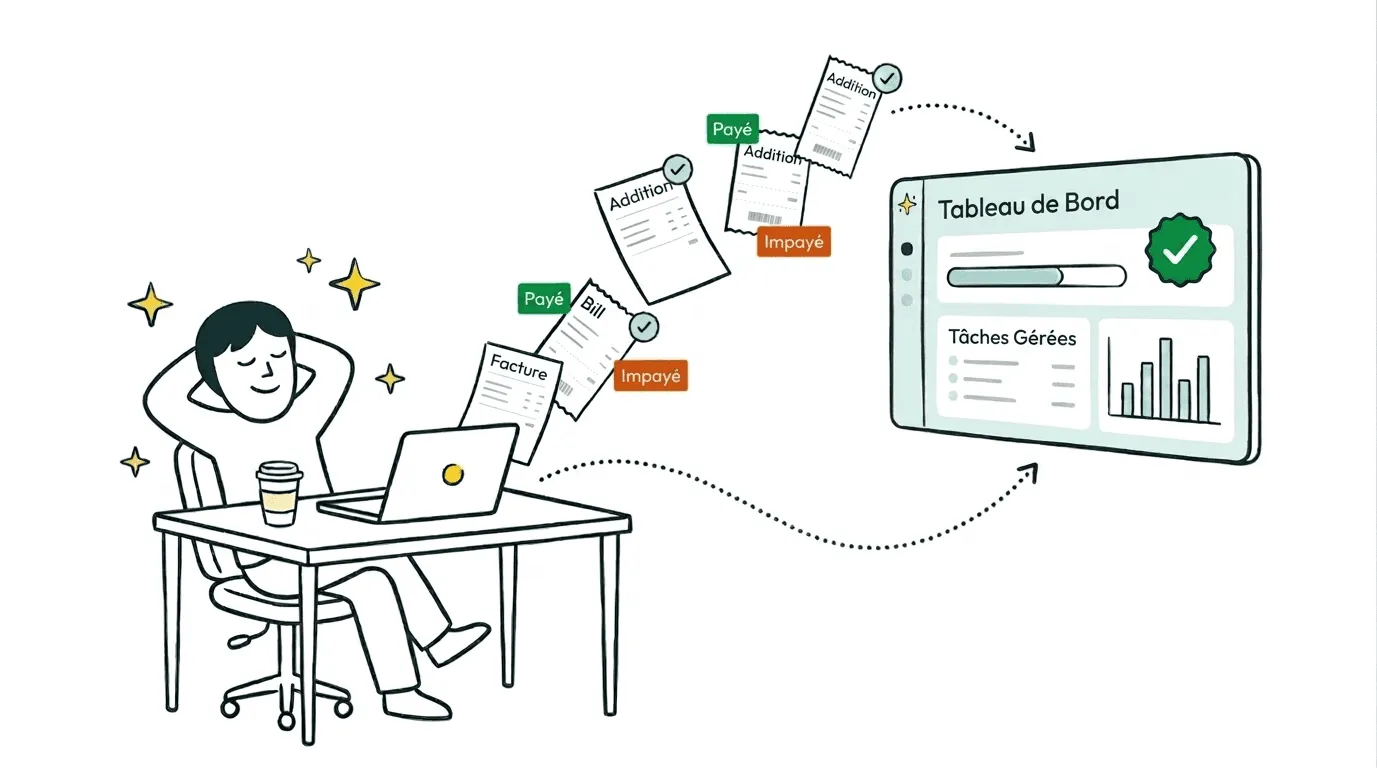
Sanso handles your invoicing, bill processing, payment collection, and reconciliation as a service - so you stop doing finance admin and start running your business.
Book a CallWhat Is Outsourced Bookkeeping?
Outsourced bookkeeping means hiring an external provider to handle your financial recordkeeping instead of doing it yourself or bringing on an in-house bookkeeper. The provider takes care of day-to-day tasks: categorizing expenses, reconciling bank accounts, managing accounts payable and receivable, and keeping your general ledger current.
The scope varies a lot depending on who you work with. Some providers only do basic transaction recording. Others offer full-service outsourced accounting and bookkeeping services that include invoicing, bill pay, payroll support, and financial reporting. The most advanced providers, like Sanso, use AI to automate the bulk of the work and layer in human oversight for edge cases, effectively replacing the need for a dedicated finance hire.
What outsourced bookkeeping is not: it's not the same as hiring a CPA for tax prep. It's not auditing. And it's not a replacement for strategic financial planning. Think of it as the operational layer. It makes sure the numbers get recorded correctly so your accountant, your CPA, and you can actually make informed decisions.
Why Small Businesses Outsource Bookkeeping
The short answer: because doing it yourself is expensive, even when it feels free.
The Real Cost of DIY Bookkeeping
When founders handle their own books, they almost never track how much time it actually takes. Research suggests that small business owners spend an average of 10 to 15 hours per week on financial administration. If you put a conservative dollar figure on what your time is worth, that's thousands per month in opportunity cost. Time you could spend on sales calls, product development, or simply going home before 9 PM.
The hidden costs go beyond time, too. The IRS charges failure-to-deposit penalties between 2% and 15% of unpaid payroll taxes depending on how late the deposit is. One missed deadline can cost more than several months of professional bookkeeping.
The In-House Bookkeeper Problem
Hiring solves the time problem but creates new ones. A full-time in-house bookkeeper in the US runs $45,000 to $65,000 per year in salary. Factor in payroll taxes, benefits, retirement contributions, workspace, software subscriptions, training, and recruiting expenses, and you're realistically looking at $65,000 to $100,000 per year.
For a 10-person company doing $1 to $3 million in revenue, that's a big overhead line item for a role that handles transactions, not strategy.
Why Outsourcing Wins
Outsourced bookkeeping gets rid of the overhead while delivering better consistency. A Clutch survey found that 27% of small businesses outsource tasks specifically to save time and improve efficiency.
But cost savings are only part of it. Here's what outsourced accounting and bookkeeping services actually give you:
- Accuracy and compliance. Professional providers stay current on tax laws, GAAP standards, and regulatory changes. Your books stay clean without you having to learn the rules yourself.
- Fraud prevention. Outsourced services build in separation of duties, documented workflows, and traceable audit trails. These are controls that most small businesses simply can't implement internally.
- Scalability. When your transaction volume doubles because business is growing, an outsourced provider scales with you. No need to hire a second bookkeeper.
- Technology access. Most providers use cloud-based accounting platforms, giving you real-time visibility into your financials. Your numbers reflect what's happening right now, not two months ago.
How Much Does Outsourced Bookkeeping Cost?
Outsourced bookkeeping for small businesses typically costs between $500 and $2,500 per month, depending on transaction volume, complexity, and the scope of services included.
Here's how the main pricing models break down:
Hourly Rates
Freelance bookkeepers charge $25 to $60 per hour. This works for businesses with simple, predictable needs, but costs can spike during busy months. You also carry the management overhead of tracking hours and reviewing their work.
Fixed Monthly Packages
Most outsourced bookkeeping firms offer tiered monthly plans:
- Basic ($300 to $800/month): Transaction categorization, bank reconciliation, monthly financial statements
- Standard ($800 to $1,500/month): Everything above plus accounts payable management, accounts receivable tracking, and vendor communication
- Premium ($1,500 to $3,000+/month): Full-service finance operations including payroll support, cash flow reporting, and dedicated account management
Outcome-Based Pricing
A newer model, and the one we use at Sanso, ties pricing to actual financial operations handled rather than hours worked or arbitrary tiers. You pay based on invoices processed, payments managed, and reconciliations completed. Our plans start at $300/month. This aligns incentives: the more work the provider handles, the more value you get.
The Cost Comparison at a Glance
| Option | Monthly Cost | Annual Cost | What You Get |
|---|---|---|---|
| DIY (your time) | "Free" | 10 - 15 hrs/week of lost productivity | Stress, errors, missed deadlines |
| Freelance bookkeeper | $500 - $1,500 | $6,000 - $18,000 | Basic recordkeeping, variable quality |
| In-house hire | $4,500 - $8,500 | $65,000 - $100,000 | Full-time resource with overhead |
| Outsourced service | $500 - $2,500 | $6,000 - $30,000 | Professional operations, no overhead |
| AI-powered service (Sanso) | $300 - $2,000 | $3,600 - $24,000 | Automated operations + human oversight |
What to Look for in an Outsourced Bookkeeping Provider
Not all outsourced accounting and bookkeeping services are equal. Here's what separates a great provider from one that creates more headaches than it solves.
1. Integration With Your Existing Tools
Your provider should work with the accounting platform you already use, whether that's QuickBooks, Xero, or Pennylane. Avoid anyone who forces you to switch platforms or learn a new dashboard. At Sanso, everything we do shows up in your current accounting platform. You check your books exactly the way you always have. The only difference is the work is already done.
2. Proactive Invoice Collection
Basic bookkeeping services wait for you to hand over invoices. Better providers actively collect invoices from your email, supplier portals, and other sources. Sanso's AI connects to your mailbox to automatically identify and capture supplier invoices via email autocapture, and it even logs into vendor websites to download bills you'd otherwise have to retrieve manually.
If you're evaluating accounts payable outsourcing services specifically, this is probably the most important differentiator. A provider that only processes invoices you hand them is doing half the job.
3. Validation and Error Catching
Look for providers that verify invoices before they hit your books. That means checking for duplicates, validating amounts against purchase orders or approved quotes, and flagging VAT or tax discrepancies. This kind of validation prevents costly errors down the line, like duplicate payments, which happen far more often than most business owners realize.
For a deeper look at how automation handles these checks, see our breakdown of the best accounts payable automation software in 2026.
4. Human Oversight for Edge Cases
AI and automation handle the routine work well. But every business has edge cases: disputed invoices, unusual transactions, vendor communication that requires judgment. The best outsourced bookkeeping providers combine technology with human operators who step in when the situation calls for it.
Worried about hiring the wrong person?
Sanso gives you full finance operations coverage starting at $300/month - no recruiting, no onboarding, no coverage gaps when someone calls in sick.
Book a Call5. Transparent Pricing
Avoid providers with unclear pricing or hidden fees for "extra" transactions. You should know exactly what you're paying for and what triggers cost increases. Outcome-based pricing models make this pretty straightforward.
6. Data Security
You're handing over financial data, so ask about encryption standards, data handling practices, and where your information is stored. Look for providers with established security practices and clear policies on data access.
Outsourced Bookkeeping vs. Hiring In-House
This is the most common decision small business owners wrestle with. Here's how the two options compare:
| Factor | Outsourced Bookkeeping | In-House Bookkeeper |
|---|---|---|
| Monthly cost | $300 - $2,500 | $4,500 - $8,500+ |
| Availability | 24/7 (with AI-powered services) | Business hours only |
| Coverage during vacation/sick days | Always covered | You're on your own |
| Expertise | Cross-industry experience | Single-company knowledge |
| Scalability | Scales with transaction volume | Fixed capacity until you hire again |
| Hiring risk | None | Wrong hire costs 6+ months |
| Setup time | Days to weeks | Months (recruiting, onboarding, training) |
The math is pretty straightforward for most small businesses. Unless you have highly specialized needs that require someone physically present, outsourcing tends to deliver more value at lower cost and lower risk.
Choose Outsourced Bookkeeping If:
- You have fewer than 50 employees
- You don't have a dedicated finance person (and don't want to hire one)
- Your bookkeeping needs are standard: invoicing, bill pay, reconciliation, reporting
- You want to focus your time on growing the business, not managing finance admin
Consider In-House If:
- You need a finance person physically present for daily operations
- Your business has highly specialized or unusual accounting requirements
- You're large enough to justify the $65,000 to $100,000 annual cost
Outsourced Bookkeeping vs. Accounting Software
Some business owners think buying QuickBooks or Xero solves the bookkeeping problem. It doesn't.
Accounting software gives you a place to record financial data. But someone still has to do the recording. Someone still needs to collect invoices from suppliers, categorize expenses, reconcile accounts, and follow up on late payments. The software is a tool. It's not a worker.
This is the gap that AI-powered finance operations services fill. Instead of giving you more software to learn and manage, a service like Sanso does the actual work. Our AI captures supplier invoices from email and supplier portals, routes them to your accounting platform, validates them for errors, and flags anything unusual, all without you lifting a finger.
The right question isn't "QuickBooks or outsourced bookkeeping?" It's "Who's going to do the work inside QuickBooks?"
How AI Is Changing Outsourced Bookkeeping in 2026
Traditional outsourced bookkeeping relies on human accountants doing manual work: data entry, categorization, reconciliation. It works, but it's slow, it's expensive, and it's prone to the same errors any manual process produces.
AI-powered outsourced bookkeeping services flip this model. The technology handles the repetitive, high-volume work while humans focus on the exceptions that need judgment.
At Sanso, this is exactly how we operate:
- Email AutoCapture connects to your mailbox and uses AI to analyze every incoming email and attachment. It tells real invoices apart from quotes, contracts, and marketing emails, then routes only actual invoices to your accounting platform.
- Website AutoCapture deploys an AI agent that logs into your supplier portals, navigates to billing sections, and downloads invoices automatically. No more logging into 15 different websites every month.
- Invoice validation checks every invoice for duplicates, verifies amounts, and catches VAT issues before anything gets approved for payment.
- Human-in-the-loop operators handle the roughly 1% of transactions that don't fit standard rules: disputed amounts, unusual invoices, vendor communication that needs a real person.
The result is outsourced bookkeeping that runs around the clock, catches errors that humans miss, and costs a fraction of what a traditional bookkeeping firm charges. AI handles roughly 99% of the work; humans handle the rest.
How to Switch to Outsourced Bookkeeping
Making the transition doesn't have to be painful. Here's a five-step approach:
Step 1: Audit Your Current Process
Write down what you're doing now. How many supplier invoices do you process per month? How much time goes into bank reconciliation? What accounting software do you use? What's falling through the cracks?
Step 2: Define What You Need
Decide which tasks you want to hand off. For most small businesses, the answer is "everything," but be specific. Accounts payable? Accounts receivable? Reconciliation? Payroll? The clearer your scope, the better your provider match.
Step 3: Evaluate Providers
Compare at least three options. Look at pricing models, tool integrations, the balance of automation and human support, and how they handle onboarding. Ask for references from businesses similar to yours.
Step 4: Onboard and Connect
With traditional firms, onboarding can take weeks. With AI-powered services like Sanso, setup is a one-time connection of your email and accounting platform. After that, the service runs in the background.
Step 5: Monitor and Adjust
Check your financial reports for the first few months to make sure everything is tracking correctly. A good provider will proactively flag issues and adjust workflows as they learn your business patterns.
Common Mistakes to Avoid
Choosing on price alone. The cheapest outsourced bookkeeping option often creates more cleanup work than it saves. Prioritize accuracy and reliability over the lowest monthly fee.
Not checking integrations first. If your provider doesn't work with QuickBooks, Xero, or whatever platform you use, you'll end up with a data migration headache.
Waiting too long to switch. Most business owners wait until their books are a mess before outsourcing. The best time to switch is when things are still manageable. Cleaning up months of neglected books costs more than starting with a clean handoff.
Ignoring the accounts payable side. Many outsourced bookkeeping providers focus on recordkeeping and reporting but leave accounts payable management to you. If supplier invoices are a major pain point, look for providers that offer full accounts payable outsourcing services, including invoice collection, validation, and payment tracking.
Skipping references. Ask any provider for client references from businesses similar to yours. A great sales pitch doesn't always mean great execution.
When Is the Right Time to Outsource?
Most business owners wait too long. Here are the signs it's time:
- You're spending more than 5 hours a week on finance admin. That's 260 hours a year, over six full work weeks.
- You've missed a supplier invoice or double-paid one. These aren't one-off mistakes. They're symptoms of a system that isn't working.
- Tax season feels like a fire drill. If preparing for your accountant involves a panic-fueled scramble through receipts and bank statements, your books need professional attention.
- You're growing. More clients, more suppliers, more transactions. The complexity compounds faster than you'd expect.
- You can't answer basic financial questions. Who owes us money? How much did we spend on software last quarter? If you can't answer in 30 seconds, your books aren't where they need to be.
If two or more of these sound familiar, it's probably time. And if you want to see what AI-powered outsourced bookkeeping looks like in practice, book a call with Sanso and we'll show you.
AI handling 90% sounds too good?
Sanso pairs AI automation with human operators who handle disputes, edge cases, and supplier follow-ups - everything shows up in your existing QuickBooks or Xero account.
Book a CallFrequently Asked Questions
What is outsourced bookkeeping? Outsourced bookkeeping is when a business hires an external provider to handle financial recordkeeping tasks like transaction categorization, bank reconciliation, accounts payable, accounts receivable, and financial reporting, instead of doing these tasks in-house or hiring a full-time bookkeeper.
How much does outsourced bookkeeping cost for a small business? Most small businesses pay between $500 and $2,500 per month for outsourced bookkeeping, depending on transaction volume and scope of services. AI-powered services like Sanso start at $300/month with outcome-based pricing, while freelance bookkeepers typically charge $25 to $60 per hour.
What's the difference between outsourced bookkeeping and outsourced accounting? Bookkeeping focuses on day-to-day transaction recording: categorizing expenses, reconciling accounts, managing invoices. Accounting is higher-level work like financial analysis, tax planning, and strategic advice. Many outsourced accounting and bookkeeping services offer both, but bookkeeping is the operational foundation that accounting builds on.
Is outsourced bookkeeping safe for my business data? Generally, yes, as long as you choose a reputable provider. Look for established security practices including data encryption, access controls, and clear policies on data handling. Outsourced providers often have stronger security protocols than a solo in-house bookkeeper because they serve multiple clients and invest in that infrastructure accordingly.
What tasks can I outsource to a bookkeeping service? Common tasks include bank and credit card reconciliation, accounts payable and receivable management, invoice processing and bill pay, expense categorization, financial statement preparation, and vendor communication. AI-powered services like Sanso also automate invoice collection from emails and supplier portals.
How do I choose between a freelance bookkeeper and an outsourced bookkeeping firm? Freelancers are cheaper but carry single-point-of-failure risk. If they get sick or quit, your books stop. Firms offer team coverage, better technology, and established processes. AI-powered services tend to offer the best combination: automated operations with human oversight, consistent quality, and lower costs than traditional firms.
Can outsourced bookkeeping work with my existing accounting software? Most outsourced bookkeeping providers integrate with popular platforms like QuickBooks, Xero, and Pennylane. The best providers work directly inside your existing tools so you don't need to learn a new system. Sanso connects to your current accounting platform and your results appear there, no separate dashboard required.
When should a small business start outsourcing bookkeeping? Consider outsourcing when bookkeeping takes more than 5 hours per week, when you're missing deadlines or making errors, when your business is growing and financial complexity is increasing, or when the opportunity cost of DIY bookkeeping exceeds the cost of a provider. For most businesses, the tipping point seems to be around 5 to 10 employees.
What are accounts payable outsourcing services? Accounts payable outsourcing services handle the entire process of receiving, verifying, and paying supplier invoices. This includes collecting invoices from emails and vendor portals, validating amounts and checking for duplicates, routing approvals, and syncing everything to your accounting platform. It's one of the highest-value parts of outsourced bookkeeping because AP is where most manual work and errors tend to concentrate.
How is AI-powered outsourced bookkeeping different from traditional outsourcing? Traditional outsourced bookkeeping relies on human accountants doing manual data entry and reconciliation. AI-powered services like Sanso automate the repetitive work: invoice capture, data extraction, categorization, transaction matching. Humans only step in for edge cases. This means faster processing, fewer errors, around-the-clock operation, and lower costs. AI handles roughly 99% of routine transactions, with human operators taking care of the rest.